
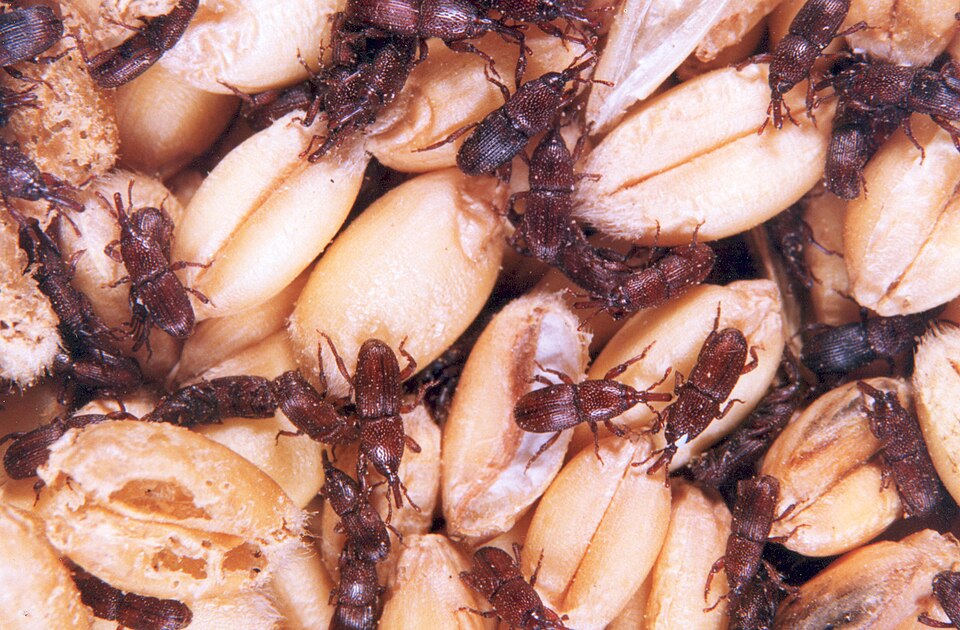

Grain weevils are one of the hardest stored grain pests to get rid of, because most of their life is spent hidden inside a single grain. By the time you see adults on the surface, the next generation is already developing deep in the bulk.
We provide grain weevil treatment for stored wheat, barley and other cereals across the UK. Our fumigation kills weevils at every life stage, from eggs to adults, and it comes with a full guarantee.
What is a grain weevil?
The grain weevil (Sitophilus granarius) is a small beetle, around 3 to 5 mm long, dark brown to almost black, with a distinctive long snout at the front of its head. It can’t fly, so it usually arrives with infested grain, in contaminated trailers and equipment, or from old residues left in a store.
It’s known as a primary pest, which means it can attack whole, undamaged grains. Many other storage insects can only feed on broken grain and dust, and often follow on where weevils have already done damage.
How grain weevils damage stored grain
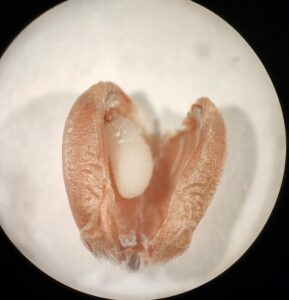

A female weevil chews a small hole in a kernel, lays a single egg inside and seals it. The larva develops entirely within the grain, eating it out from inside, before the new adult chews its way out and leaves a small round exit hole. Each female can lay a couple of hundred eggs over her life, so numbers build quickly in warm grain.
That hidden life cycle is what makes weevils so costly: hollowed-out grains, lost weight and quality, heat and moisture building up in the bulk, and the risk of a rejected load, because most buyers reject grain with live insects.
Signs of grain weevils
- Adult weevils, recognisable by their long snout, in traps, on the grain surface or on store walls
- Kernels with small, round exit holes
- Hollow, light grains and floury dust in the bulk
- Hot spots or rising temperatures in the grain
- A failed merchant inspection or a load rejected at intake
A simple check: hollowed-out grains are lighter than sound ones, so infested grain often floats when you drop a handful into water.
Why grain weevils need fumigation
Because weevil larvae live inside the grain, surface sprays and admixtures can’t reach them. A spray may kill some of the adults you can see, but the next generation simply keeps emerging from inside the kernels.
Fumigation works differently. Phosphine gas penetrates the whole bulk and the inside of each grain, killing eggs, larvae, pupae and adults together. That’s why grain fumigation is the most effective grain weevil treatment once an infestation is established.
Our grain weevil treatment, step by step
- Survey and identification. We confirm it’s grain weevil, check how far the infestation has spread, and take the tonnage and grain temperature.
- Sheeting and sealing. Gas-proof sheets go over the grain, or the silo or bin is sealed.
- Application. Our RSPH-qualified team applies aluminium phosphide, with warning signs and controlled access.
- Treatment period. 14 to 28 days, depending on tonnage and temperature, so the gas reaches weevils inside every kernel.
- Gas checks and removal. We check gas readings, then remove the gas, sheeting and signs.
- Clearance certificate. You receive a certificate confirming the site is safe, ready for your buyer.
Stopping weevils coming back
- Clean the empty store thoroughly. Weevils survive between harvests in old grain and residues in cracks, corners and pits.
- Treat the store before harvest. Our pre-harvest insect treatment protects the building fabric before the new crop goes in.
- Cool grain quickly. Weevils breed far more slowly in cold grain.
- Check incoming grain and shared equipment. Because grain weevils can’t fly, they usually arrive in grain, trailers, augers and conveyors.
- Monitor through the season with insect traps and temperature probes.
Other weevils you might find
The rice weevil and maize weevil (Sitophilus oryzae and Sitophilus zeamais) look similar but can fly, and are more common in imported grain and warmer climates. If you find weevils in an imported consignment, see our container fumigation service. For other storage insects, see our stored grain pests identification guide.
Grain weevil FAQs
Can I treat grain weevils myself?
Not effectively. Sprays don’t reach the larvae developing inside kernels, and aluminium phosphide is highly toxic and restricted to trained, certified fumigators.
Will fumigation kill weevil eggs and larvae?
Yes. Phosphine gas reaches inside the grain, so fumigation kills every life stage: eggs, larvae, pupae and adults.
How long does grain weevil treatment take?
Usually 14 to 28 days from sealing to clearance, depending on tonnage and grain temperature.
Can I sell the grain after treatment?
Yes, once we’ve finished, removed the gas and cleared the site. Your clearance certificate confirms we completed the treatment.
How did weevils get into my store?
Usually in infested grain, in trailers and handling equipment, or from old residues left from a previous harvest. Grain weevils can’t fly, so they rarely arrive on their own.
Is the treatment guaranteed?
Yes. Our fumigation comes with a full guarantee to eradicate all life stages of stored product pests.
Book your grain weevil treatment
Found weevils in your grain? The sooner it’s treated, the less grain is lost. Call us on 07860 384560 or 01235 819922, or send us a few details and we’ll call you back the same day with advice and a free, no-obligation quote.
Last reviewed