
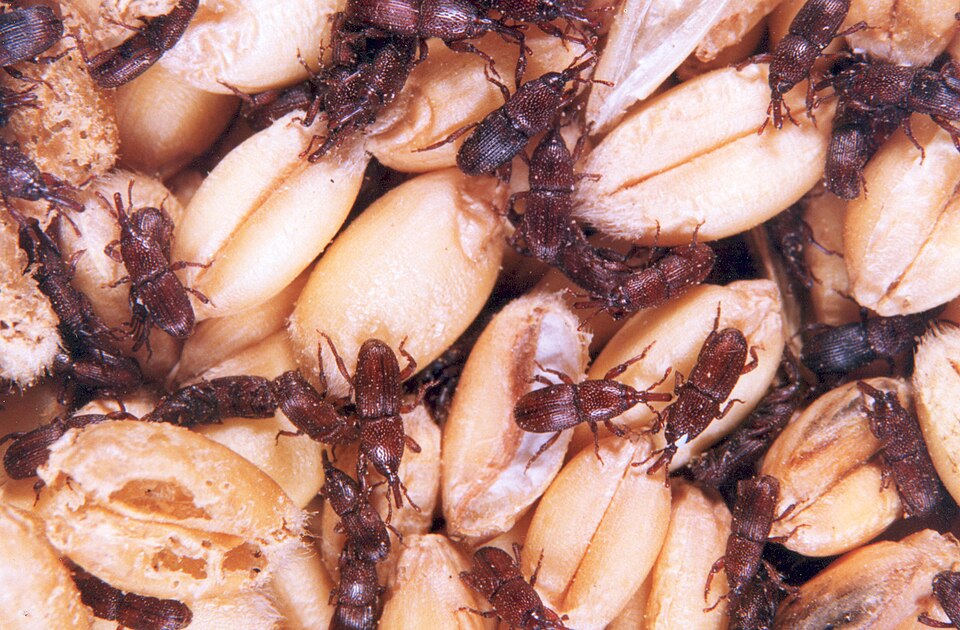

Most infestations of stored grain pests are caught late, because the insects are small and spend much of their lives hidden in the bulk. Knowing what you’re looking at, and what it means, helps you act before a load is rejected.
This guide covers the stored grain pests we find most often in UK grain stores, how to recognise them, and what to do if you find them.
In this guide:
- Primary and secondary pests
- Grain weevil
- Saw-toothed grain beetle
- Rust-red grain beetle
- Flour beetles
- Grain and flour mites
- Booklice (psocids)
- Stored product moths
- Signs of an infestation
- How to check your grain
- What to do if you find pests
- Preventing infestations
Primary and secondary pests
Stored grain pests fall into two groups. Primary pests, such as the grain weevil, can attack whole, sound grains. Secondary pests feed on broken grain, dust and grain that’s already been damaged by another pest or by poor storage.
Finding secondary pests often points to damage, dust or damp somewhere in the store, so it’s worth asking why they’re there as well as dealing with them.
Grain weevil
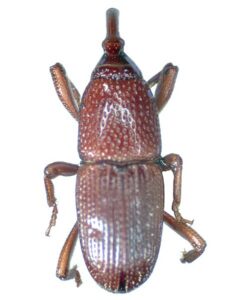

Sitophilus granarius. A dark brown to almost black beetle, around 3 to 5 mm long, with a distinctive long snout. It can’t fly. The female lays her eggs inside individual grains and the larvae develop hidden within them, so an infestation is usually well established before adults appear on the surface.
Look for small round exit holes in kernels, hollow grains and floury dust. Weevils need fumigation, because sprays can’t reach the larvae inside the grain. See our grain weevil treatment page.
Saw-toothed grain beetle
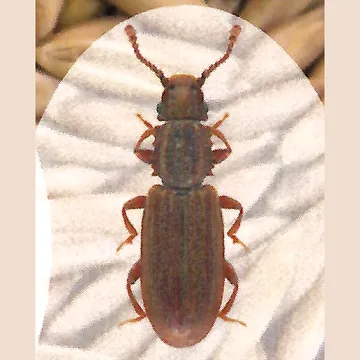
Oryzaephilus surinamensis. A small, flat, dark brown beetle around 2.5 to 3.5 mm long, named after the six tooth-like points along each side of the section behind its head. It’s a secondary pest that feeds on broken grain and dust.
It breeds quickly in warm grain, and large numbers generate heat, which can lead to hot spots and moisture problems in the bulk.
Rust-red grain beetle
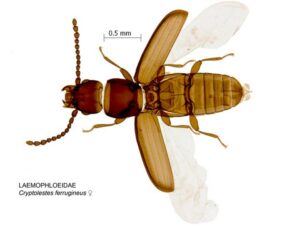

Cryptolestes ferrugineus. One of the smallest storage beetles at around 2 mm long: flat, reddish-brown and with long antennae. Its larvae feed on the germ of damaged grain.
It copes with cooler conditions better than many storage insects, and can build up quickly and cause heating. It’s one of the most serious storage pests in UK grain. See how we dealt with it in our case study: rust-red grain beetle in 250 tonnes of barley near Bristol.
Flour beetles
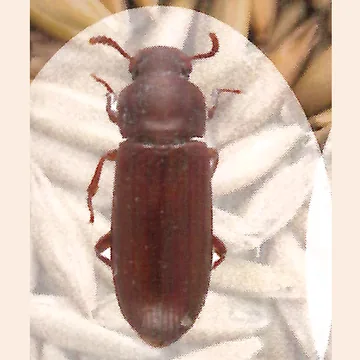
Tribolium species. Reddish-brown beetles around 3 to 4 mm long that feed on broken grain, flour and dust rather than whole grain. You’ll usually find them where dust and residues have built up.
Heavy infestations taint grain and flour with an unpleasant smell and discolouration.
Grain and flour mites
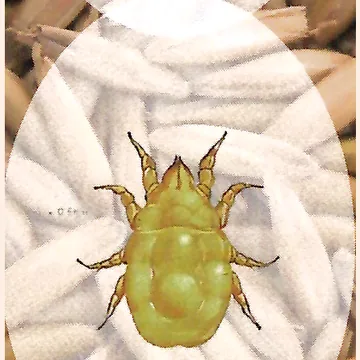
Acarus siro and related species. Mites aren’t insects: they’re pale and less than half a millimetre long, so a heavy infestation can look like moving dust on the grain surface. They thrive in damp grain and leave a distinctive sweet, minty or musty smell.
Mites are a sign that grain is too damp. Drying and cooling the grain are the first steps, and we’ll advise whether treatment is needed. Some people also find mite-infested grain dust irritating to breathe.
Booklice (psocids)
Tiny, pale, soft-bodied insects around 1 mm long that feed on moulds in damp grain and residues. They do little direct damage to sound grain, but large numbers are a sign of damp conditions and can lead to a load being rejected.
Stored product moths
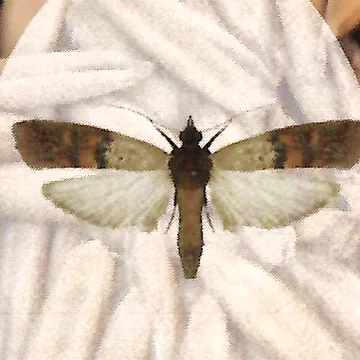
The warehouse moth (Ephestia elutella) and Indian meal moth (Plodia interpunctella) are the most common. The small adult moths are often seen flying in the store or resting on walls.
The damage is done by the caterpillar-like larvae, which spin silk webbing across the grain surface and bind grains together into clumps.
Signs of an infestation
- Live or dead insects in traps, on the grain surface or around store walls and floors
- Hot spots or rising temperatures in the bulk
- A sweet, minty or musty smell
- Webbing, crusting or clumped grain near the surface
- Kernels with small round exit holes, or hollow grains
- Frass, dust, cast skins or trails in floury dust
- A failed merchant inspection or a load rejected at intake
How to check your grain
- Use insect traps. Traps placed in the grain surface catch insects long before you’d spot them by eye. Check them regularly, especially after warm spells.
- Watch the temperature. Temperature cables or probes show hot spots developing. A rise for no obvious reason often means insect activity.
- Sample from different places. Take samples from the surface, near the walls and at depth, and sieve them. Insects tend to gather in the warmest parts of the bulk.
- Look at the store itself. Check residues in corners, pits, ledges and handling equipment, where pests shelter between harvests.
What to do if you find pests
- Don’t move or sell the grain until you know what you’re dealing with. Moving infested grain can spread the problem.
- Keep a sample. Put a few insects in a sealed bag or jar so they can be identified.
- Check how far it’s spread. Look at your temperature readings and take samples from different parts of the store.
- Get advice. Call us for a same-day callback. For an established infestation, grain fumigation is usually the answer, because it reaches insects throughout the bulk and inside the kernels.
- Stop it happening again. Clean the store, treat it before the next harvest and keep monitoring.
Preventing infestations
- Clean the empty store before harvest. Remove old grain, dust and residues from floors, walls, pits and equipment.
- Treat the store fabric. A pre-harvest insect treatment kills insects sheltering in the building before the new crop goes in.
- Dry grain to a safe moisture content for long-term storage. Damp grain encourages mites, moulds and booklice.
- Cool grain quickly after harvest and keep it cool. Insects breed far more slowly in cold grain.
- Monitor all season with traps and temperature probes.
- Check incoming grain, trailers and equipment, especially imported consignments. See container fumigation.
Stored grain pests FAQs
Are grain store insects harmful to people?
They aren’t dangerous to handle, but they damage grain, and most buyers reject loads with live insects. Dust from mite-infested grain can irritate some people’s airways.
Can insects survive in cold grain?
Cooling slows insects down a great deal, but it doesn’t always kill them. Some species, such as the rust-red grain beetle, cope with cooler conditions better than others.
Will cleaning the store get rid of an infestation?
Cleaning removes the residues where insects shelter between harvests, which is vital for prevention. But grain that’s already infested needs treating, usually by fumigation.
How quickly can an infestation grow?
It depends mainly on temperature. In warm grain, a handful of insects at harvest can become thousands within a single storage season.
Need help identifying a pest?
Describe what you’ve found, or keep a sample, and give us a call on 07860 384560 or 01235 819922. We’ll help you identify it and tell you straight whether it needs treating. Or send us a message and we’ll call you back the same day.