
When a farmer near Bristol found beetles in a floor store of barley, the grain was already at risk of rejection. Here’s exactly what we did, step by step, from the first site survey to handing over the clearance certificate two weeks later.
| Location | Farm near Bristol |
| Crop | Barley, 250 tonnes in a floor store |
| Pest | Rust-red grain beetle (Cryptolestes ferrugineus) |
| Grain temperature | 12.4 °C |
| Treatment | Aluminium phosphide fumigation under a single gas-proof sheet |
| Length | 14 days, then a 7-day withholding period |
| Fumigator | Alex, BPCA Level 3 fumigation trained and RSPH Level 2 qualified |
| Date | November 2026 |
As well as being BPCA Level 3 fumigation trained, Alex is a fully qualified RSPH Level 2 pest control technician, working at our sister company, Total Pest Control.
The problem: rust-red grain beetle in the barley
Alex’s first job was to look at the grain itself. The barley had an infestation of rust-red grain beetle, one of the most damaging storage pests in the UK. It breeds quickly, copes with cooler grain than most insects and causes heating in the bulk.
With insects established through 250 tonnes, turning the heap or spraying the surface wouldn’t have reached them. Fumigation was the only treatment that would kill every life stage, including the larvae hidden in the grain.
Day 1: survey and safety checks
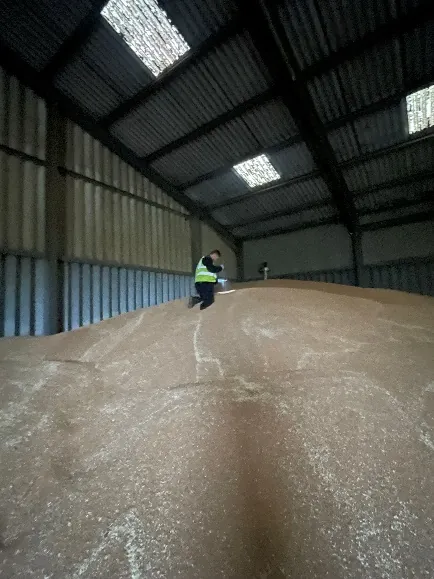
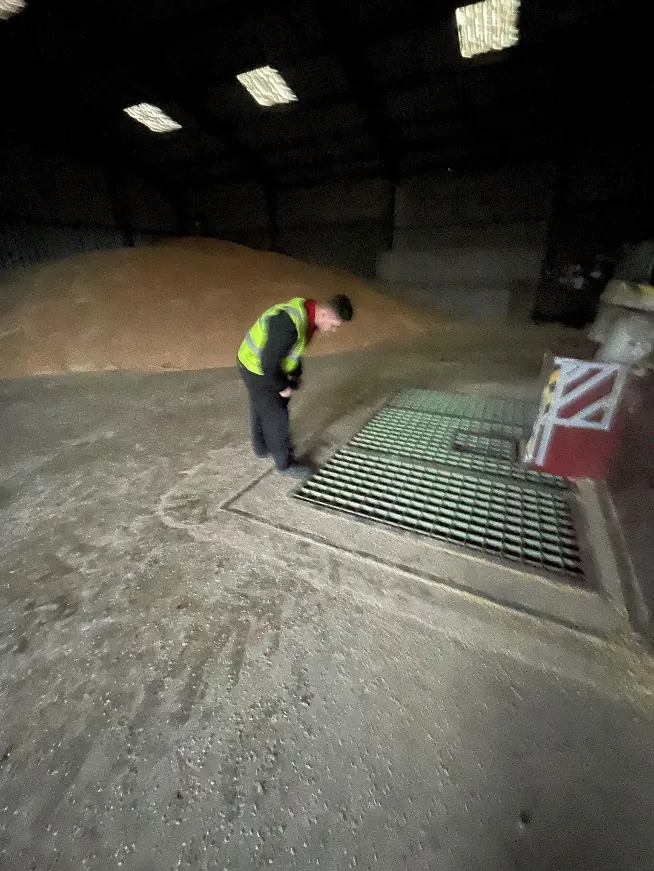
Before any fumigant comes out of the van, we survey the whole site. On this farm that meant:
- checking there were no animals or other non-target species near the store
- adding the dust boxes behind the store to the exclusion zone
- leaving a floor grate out of the treatment area, and bringing the store vents under the sheet
- checking the walls for cracks the gas could escape through
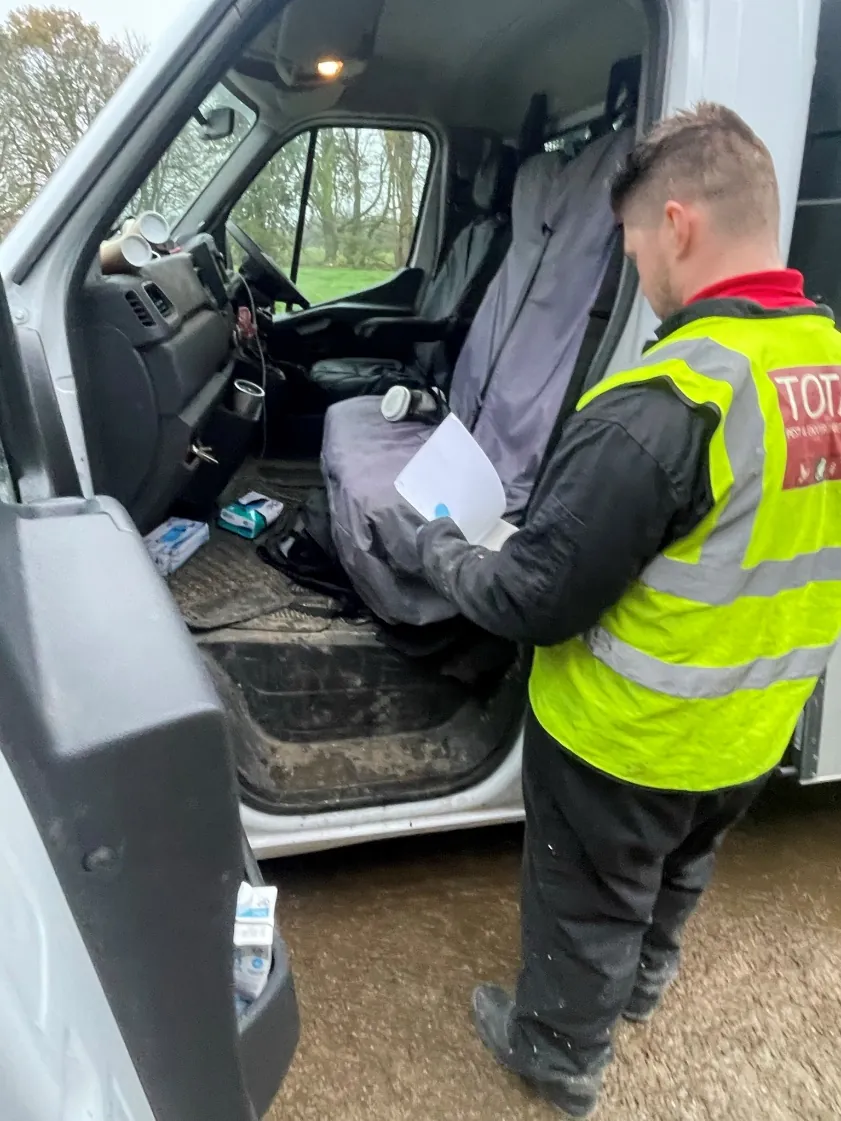
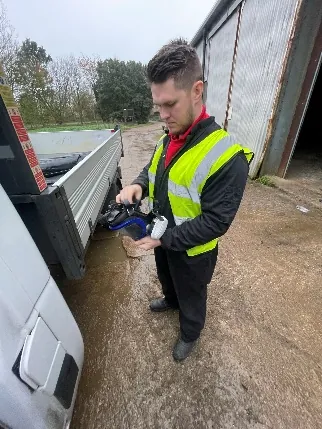
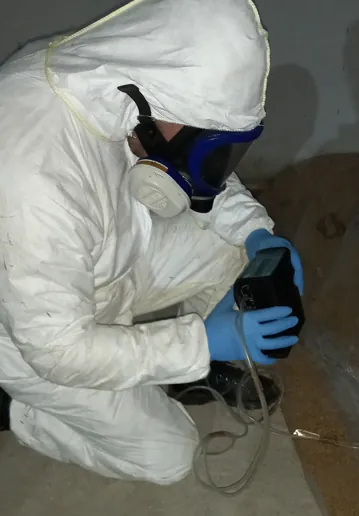
Alex then completed the risk, COSHH and environmental assessments, checked his full-face respirator and put on a personal gas monitor. He also took the grain temperature: 12.4 °C. Below 10 °C, we would have switched to a product better suited to cold grain.
Day 1: sheeting and sealing
A fumigation only works if the gas stays in, so most of the morning went on the seal:
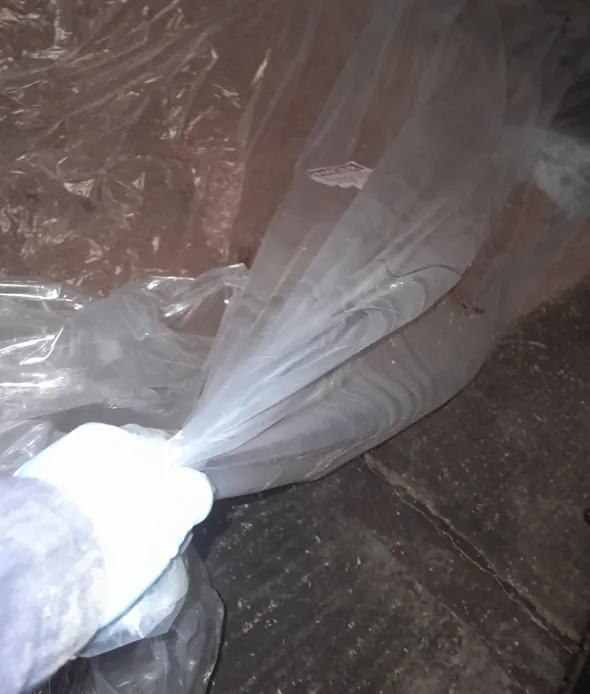
- one gas-proof sheet over the whole heap, so there were no joins to leak
- the floor swept around the heap, then the sheet edges back-buried and glued to the floor
- the fan sealed with polythene and glue
- three monitoring lines placed at the top, middle and bottom of the heap, so we could check the gas without lifting the sheet
Alex then placed the fumigant in the heap and closed up the sheet.
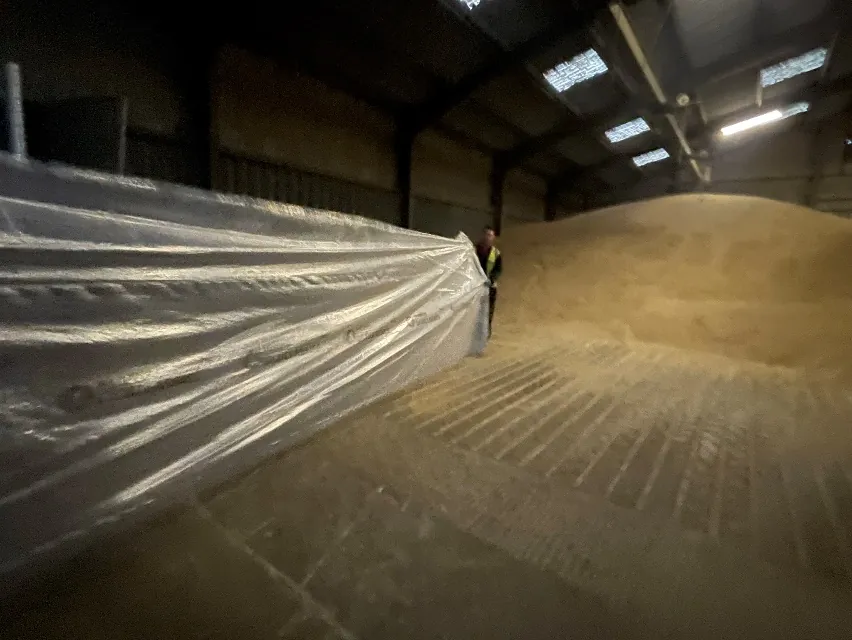
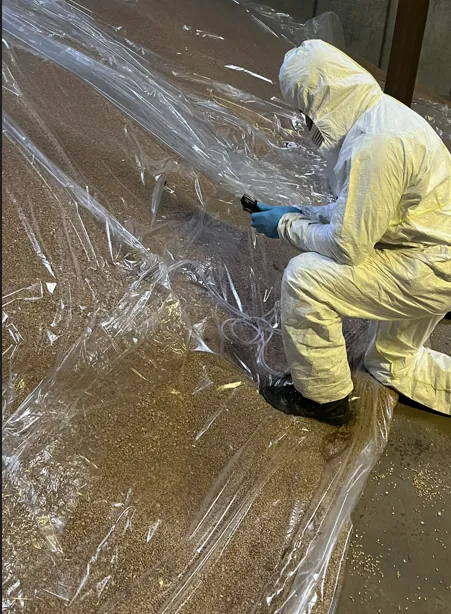
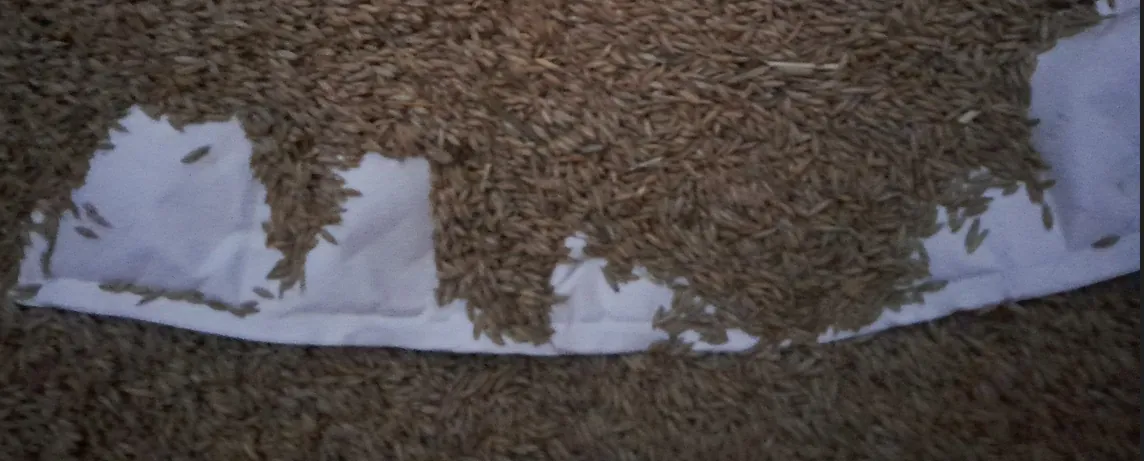
Day 1: making the site safe
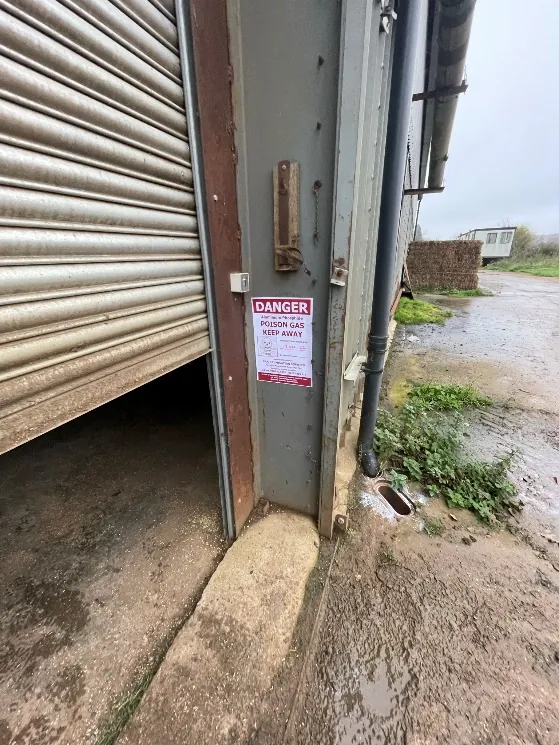
A barrier went up across the store, and danger signs showing the date and time went on the entrance and on the sheet itself. We removed the key to the door control box so nobody could open the store by mistake.
Before leaving, Alex walked the farmer through the treatment report: the risk area, how long the treatment would last, when we’d be back to monitor, and what the risk assessment had found.
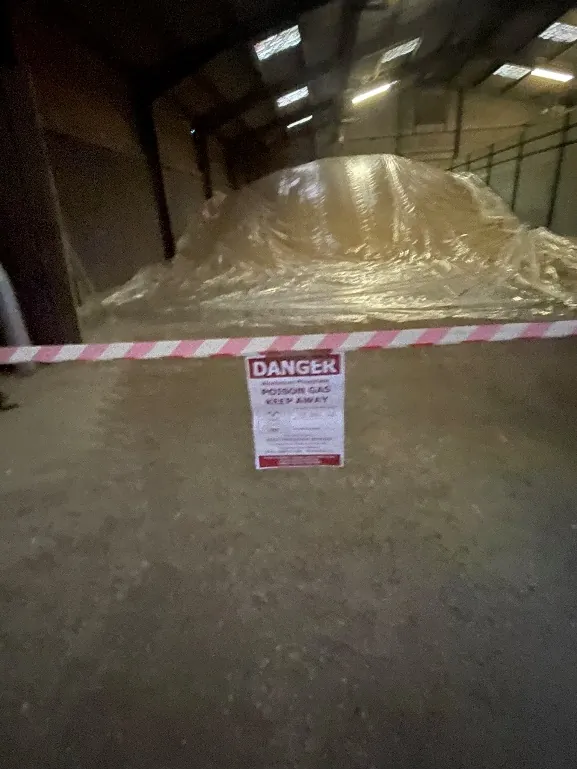
Day 7: checking the gas
We came back a week later and took readings from the top, middle and bottom of the heap. For this treatment the gas needed to stay above 500 ppm for seven days, and it had. That’s the point of the monitoring lines: we know the whole bulk has had a lethal dose, not just the top.
Day 14: venting and clearance
After a final check that the gas was still at the right level, the sheets came off and we vented the store. We recovered the spent fumigant and checked that what came out matched what went in. We then took it to a secure site to make it safe, where a registered hazardous waste carrier collected it, so we left nothing on the farm.
We advised the farmer of the 7-day withholding period before moving the grain, and they received a clearance certificate for their records, their buyer and their auditor.
The result
- 250 tonnes of barley treated in one go, without moving the grain
- the target gas level held for the full treatment period
- no gas or spent fumigant left on site
- a clearance certificate ready for the buyer and the farm’s assurance records
Found insects in your grain?
The sooner you treat an infestation, the less grain it affects. Read how grain store fumigation works, check our stored grain pests guide to see what you’re dealing with, or get in touch for a free quote. We cover farms across the UK, including Bristol and the South West.